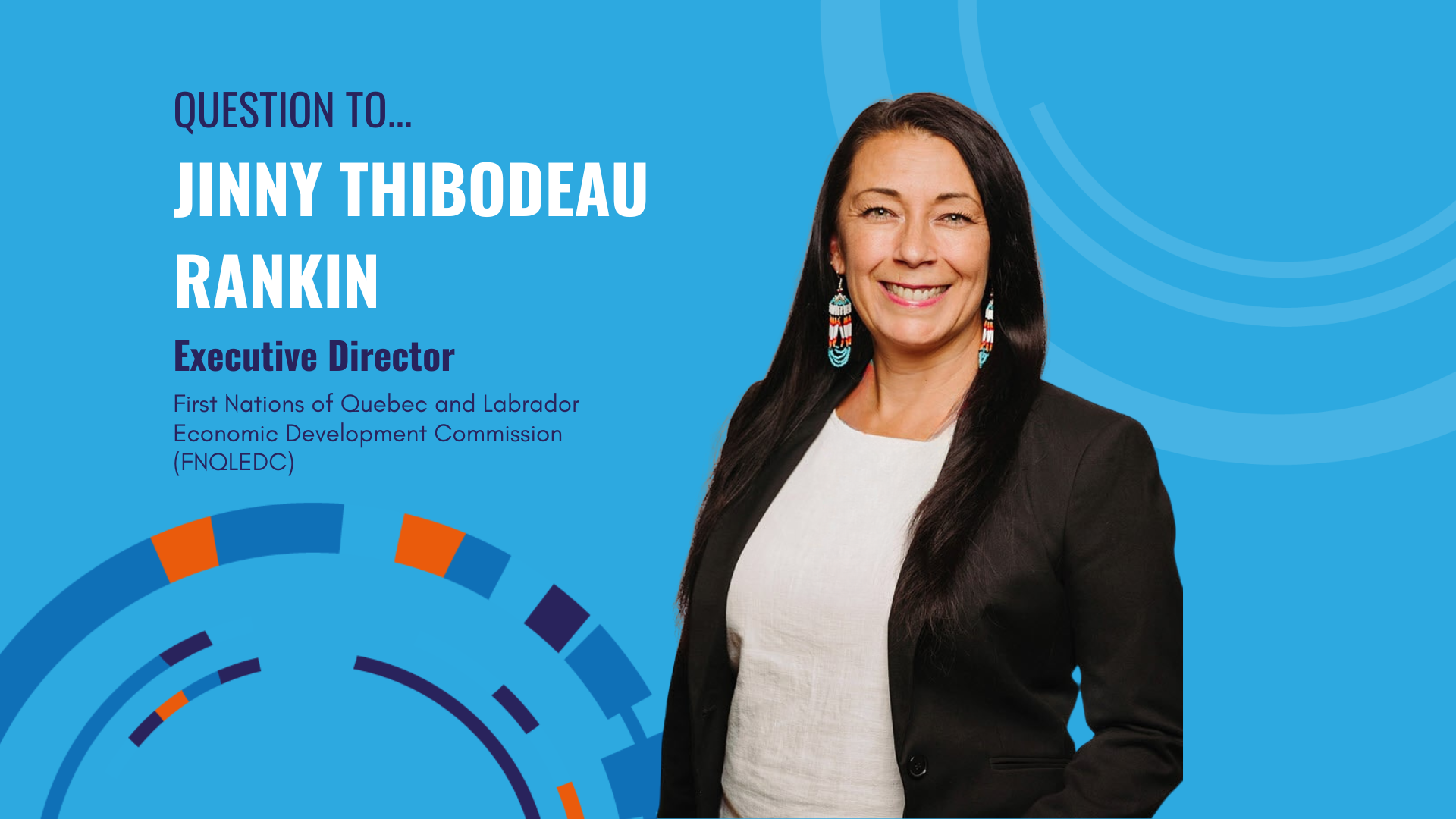
What common mistakes do Quebec businesses make when committing to economic reconciliation? We asked Jinny Thibodeau Rankin, Executive Director of the First Nations of Quebec and Labrador Economic Development Commission (FNQLEDC). Her answer might just change the way you choose to commit. Enjoy the read!
1. DISCONNECTED COLLABORATION
Doing FOR Indigenous Peoples, WITHOUT Indigenous Peoples
Too often, Quebec businesses, organizations, and political institutions impose a model or project instead of co-creating it with the concerned Indigenous communities, Nations, and members. And the result is clear: projects fail due to the lack of genuine inclusion of First Nations.
For economic reconciliation to be truly meaningful, Indigenous Peoples must be included at the discussion table from the very beginning of the project.
It all starts with: Commitment must be based on a two-way model, where the communities involved actively participate at every stage. This is a win-win approach that generates real impact for everyone.
2. MAKING A COMMITMENT IS MORE THAN SYMBOLIC
Indigenous Peoples Are Part of the Solution
Empty words for the sake of appearances are a major obstacle to economic reconciliation. Not only do they fail to restore a fair place for Indigenous Peoples in Quebec’s economy, but they also weaken relationships between Indigenous and non-Indigenous.
Genuine commitment is reflected in concrete actions: fostering Indigenous employment through inclusive hiring measures, ensuring the integration of First Nations Identification (ID1N) authenticated Indigenous suppliers in supply chains, building mutually beneficial partnerships with Indigenous communities or businesses, and more.
What makes the difference: Commit fully, with authenticity. Sincerity is measured by actions. It’s what you do, not what you say, that creates real change.
3. FAILING TO BUILD LASTING RELATIONSHIPS
Forming Connections Without Nurturing Them
Too often, relationships between non-Indigenous businesses and Indigenous communities remain superficial. Consultations happen, agreements are signed, and then… we move on.
True commitment to economic reconciliation starts with people—both those here today and future generations. It’s about adopting a mindset and approach that go beyond the present moment.
A Little-Known Reality: To build a genuine business relationship, you must first take the time to get to know each other. Many Indigenous businesses do not prioritize profit above all else; instead, they focus on collective well-being, resource sustainability, and creating a positive impact on their communities.
Go ahead, be part of the change! By committing differently, you contribute to real and lasting economic reconciliation.
