The Grand Economic Circle of Indigenous Peoples and Quebec (GECIPQ) is a movement that promotes commitments to economic reconciliation between Indigenous peoples and Quebecers. However, there is no economic reconciliation without reconciliation.
TIMELINE – 5 important moments in the reconciliation process
To foster a better understanding of this concept, here is a timeline highlighting the key moments in the reconciliation process with Indigenous peoples in Canada! 🔑
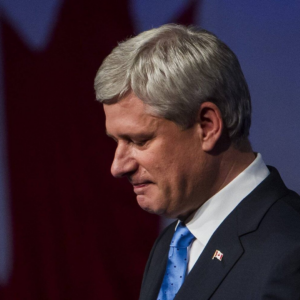 1. 2008 — Formal apology by Prime Minister Stephen Harper
On June 11, 2008, Prime Minister Stephen Harper apologized to survivors of residential schools on behalf of the Canadian government.
In his speech, he acknowledged the suffering experienced by Indigenous children: torn from their families, separated from their communities, malnourished, deprived of care, and cut off from their culture and language.
He also cited the infamous purpose of the residential schools, which was to “kill the Indian in the child.” Harper acknowledged that many of these children met tragic ends and he apologized for the federal government’s role in creating and running these schools—which existed as early as 1870 and 132 of which were publicly funded.

2. 2015 — Release of the Truth and Reconciliation Commission’s Final Report
The Truth and Reconciliation Commission (TRC) of Canada was established in 2007. Its mandate was to foster reconciliation between residential school survivors, their families, their communities and all Canadians:
“The truth telling and reconciliation process as part of an overall holistic and comprehensive response to the Indian Residential School legacy is a sincere indication and acknowledgement of the injustices and harms experienced by Aboriginal people and the need for continued healing. This is a profound commitment to establishing new relationships embedded in mutual recognition and respect that will forge a brighter future. The truth of our common experiences will help set our spirits free and pave the way to reconciliation.” (Government of Canada, n.d.)
In 2015, following several years of consultation with residential school survivors, the TRC published a report containing 94 Calls to Action (CTAs) to promote reconciliation between Indigenous Peoples and Canada. These CTAs focus on several major areas, including children and youth, languages and cultures, health, justice, history, commemoration and reconciliation.
A week before these inquiry results were published, the Chief Justice of the Supreme Court of Canada, Beverly McLachlin, stated that Indigenous peoples had been victims of cultural genocide: “In the buzzword of the day, assimilation; in the language of the 21st Century, cultural genocide.” (Radio-Canada, 2015)
The TRC put reconciliation on the public agenda. It is an important player in the appeal for reconciliation, which remains as present today as it ever has been.
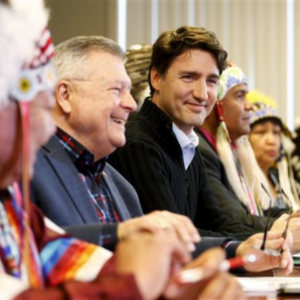
3. 2016 — Canada adopts the United Nations Declaration on the Rights of Indigenous Peoples
Among the recommendations issued by the Truth and Reconciliation Commission (TRC) in 2015 was the adoption of the United Nations Declaration on the Rights of Indigenous Peoples (UNDRIP).
The declaration is “a comprehensive international human rights instrument on the rights of Indigenous peoples around the world” (Government of Canada, 2023, p. 1). It can be adopted by states, provincial and territorial governments, organizations and institutions. Canada ratified the UNDRIP in 2016.
*Editor’s note: Quebec has not adopted the UNDRIP (The Canadian Press, 2020).
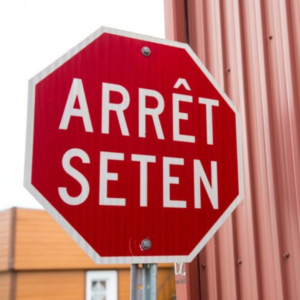
4. 2019 — An Act respecting Indigenous languages (Bill C-91)
In 2019, An Act respecting Indigenous languages (Bill C-91) was adopted by the Parliament of Canada. Its objective: to rehabilitate, revitalize, strengthen and preserve all Indigenous languages in Canada. It is in line with the United Nations Declaration on the Rights of Indigenous Peoples (UNDRIP) by allowing for the affirmation of Indigenous language rights.
This Act also allowed for the creation of the Office of the Commissioner of Indigenous Languages, which is responsible for supporting Indigenous Peoples in the preservation and promotion of their languages.
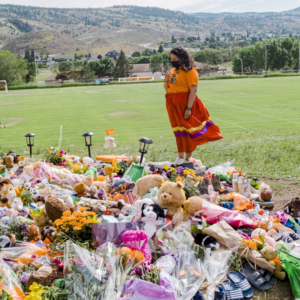
5. 2021 — Discovery of graves of Indigenous children
In May 2021, Tk’emlúps te Secwépemc First Nation Chief Rosanne Casimir revealed the discovery of the remains of 215 Indigenous children at the site of the former Kamloops residential school in British Columbia. To date, more than a thousand unmarked graves have been found.
This event marked a major turning point for reconciliation between Indigenous Peoples and Canada. The country was devastated by the true history of the residential schools. Awareness is spreading among Canadians and internationally, leading to a better understanding of Indigenous Peoples and the suffering endured in connection with the residential school system.
The road travelled and the road ahead
Reconciliation between Indigenous peoples and Canadians is a complex and evolving process, marked by significant moments that have contributed to a collective awareness.
However, there is still much that needs to be done to right the wrongs of the past. This article from the Indigenous Watchdog mentions that, for example, for three years, the percentage of overdue Calls to Action from the Truth and Reconciliation Commission (TRC) remains unchanged, with 38% still not started or at a standstill as of December 31, 2024.
Sources :
- Radio-Canada. (May 29, 2015). Les Autochtones victimes d’un « génocide culturel », dit la juge en chef de la Cour suprême. Online (French only): https://ici.radio-canada.ca/nouvelle/723002/genocide-culturel-beverly-mclachlin-autochtones-premieres-nations
- Assembly of First Nations. (2019). Assembly of First Nations Bulletin: Tabling of an Act respecting Indigenous languages in the House of Commons. Online: https://afn.ca/all-news/bulletins/assembly-of-first-nations-bulletin-tabling-of-an-act-respecting-indigenous-languages-in-the-house-of-commons/
- Boutros, M. (December 24, 2021). Pensionnats pour autochtones. Le Devoir. Online (French only): https://www.ledevoir.com/societe/656793/pensionnats-pour-autochtones-pensionnats-pour-autochtones
- Gacon, A. (September 30, 2023). Tombes autochtones anonymes : les barrières qui freinent les fouilles. Radio-Canada. Online (French only): https://ici.radio-canada.ca/espaces-autochtones/2013331/tombes-autochtones-anonymes-pensionnats-barrieres
- Government of Canada. (2007). Indian Residential Schools Agreement: Schedule N. Online: https://www.residentialschoolsettlement.ca/SCHEDULE_N.pdf
- Government of Canada. (2008). Statement of apology to former students of Indian Residential Schools. Online: https://www.rcaanc-cirnac.gc.ca/eng/1100100015644/1571589171655
- Government of Canada. (2019). Indigenous languages legislation. Department of Canadian Heritage. Online: https://www.canada.ca/en/canadian-heritage/campaigns/celebrate-indigenous-languages/legislation.html
- Government of Canada. (2023). Implementing United Nations Declaration on the Rights of Indigenous Peoples Act: Next phase of co-development. Department of Justice Canada. Online: https://www.canada.ca/en/department-justice/news/2023/03/implementing-united-nations-declaration-on-the-rights-of-indigenous-peoples-act-next-phase-of-co-development.html
- Government of Canada. (2023). The UN Declaration explained. Online: https://www.justice.gc.ca/eng/declaration/what-quoi.html
- Government of Canada. (n.d.). Truth and Reconciliation Commission of Canada. Online: https://www.rcaanc-cirnac.gc.ca/eng/1450124405592/1529106060525
- Government of Canada. (n.d.). Delivering on Truth and Reconciliation Commission Calls to Action. Online: https://www.rcaanc-cirnac.gc.ca/eng/1524494530110/1557511412801
- The Canadian Press. (August 15, 2020). Québec hésite à adopter une déclaration de l’ONU sur les droits des peuples autochtones. Le Devoir. Online (French only): https://www.ledevoir.com/politique/quebec/584191/legault-refuse-de-donner-un-droit-de-veto-aux-autochtones-sur-les-projets-economiques
