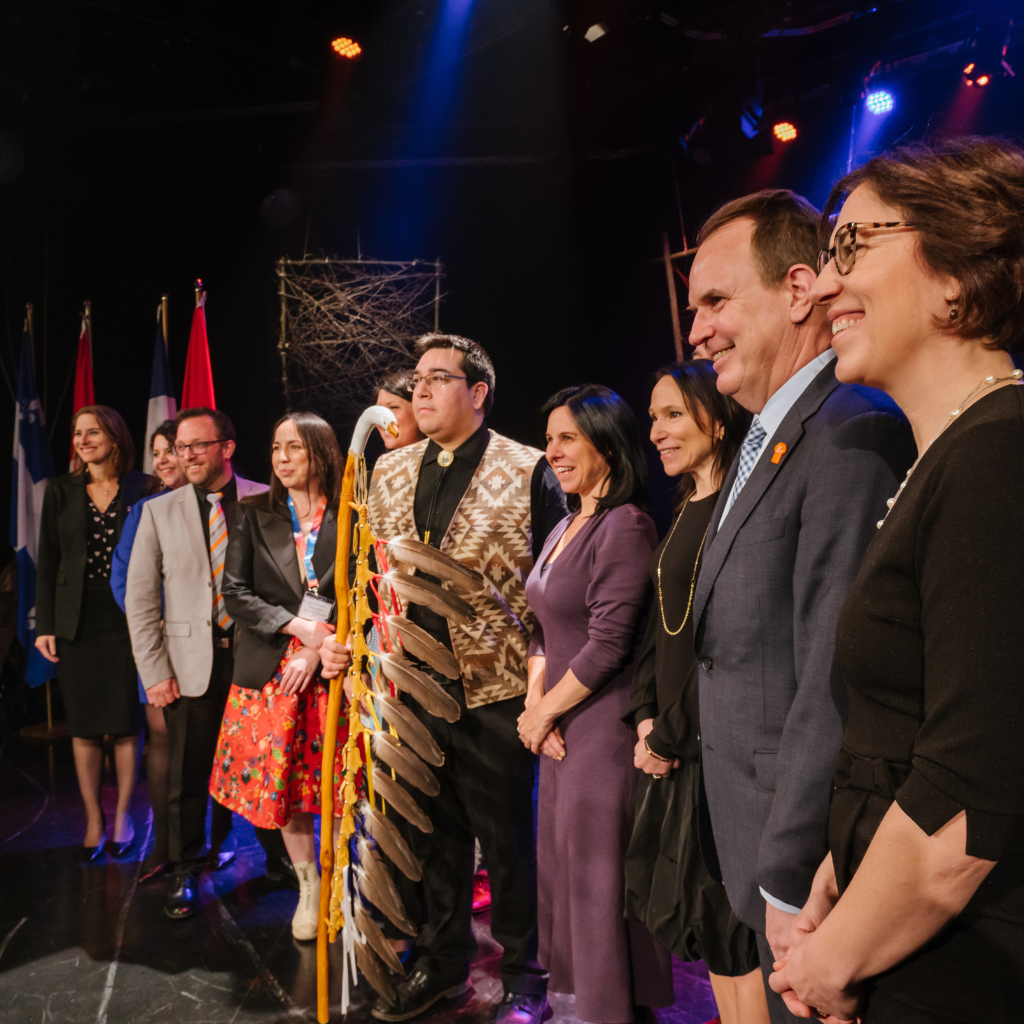
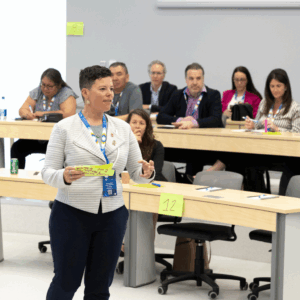
Many Quebec businesses, organizations, and political bodies want to get involved in the movement for economic reconciliation with Indigenous peoples… but they don’t know how to go about it. Where to start?
With a commitment! The GECIPQ considers a commitment to be an action whose ultimate goal is to restore Indigenous people’s rightful place in Quebec’s economy.
To see examples of commitments, consult our Commitments Guide or this article, which outlines the commitments made at the 5thRegional Economic Circle.
Indigenous Peoples have long remained on the margins of economic and social development in Quebec, which has particularly prevented them from exercising their right to development in accordance with their own needs. The socioeconomic context in which Indigenous Peoples currently find themselves does not allow for eliminating the enormous gap that separates the living conditions of Indigenous Peoples from those of Quebecers.
All Quebec civil society organizations and businesses are invited to become allies and, in doing so, become active players in economic reconciliation with Indigenous peoples!
By making a commitment, you become a force for change!
Self-determination
Growth
Benefits
Communities
Relations
Self-determination: You support the self-determination of Indigenous Peoples as well as their participation in the Quebec economy.
Growth: You become a partner in an influential process that is conducive to the economic growth of Indigenous Peoples
Benefits: You create social and economic spinoffs not only for Indigenous Peoples, but also for all of Quebec.
Communities: You take an active part in raising the standard of living in Indigenous communities.
Relations: You create business alliances and partnerships that constitute a success factor for the future of relations between Indigenous and non-Indigenous people.
Self-determination: You support the self-determination of Indigenous Peoples as well as their participation in the Quebec economy.
Growth: You become a partner in an influential process that is conducive to the economic growth of Indigenous Peoples
Benefits: You create social and economic spinoffs not only for Indigenous Peoples, but also for all of Quebec.
Communities: You take an active part in raising the standard of living in Indigenous communities.
Relations: You create business alliances and partnerships that constitute a success factor for the future of relations between Indigenous and non-Indigenous people.
Businesses can make commitments through the GECIPQ in the areas of economic development, housing, tourism, employment, training, and entrepreneurship, among others.
Tourism
Photo credit : No credit
Economic development
Photo credit : Mathieu Dupuis
Housing
The Port of Baie-Comeau is developing a partnership with the Innu community of Pessamit in the fields of tourism (international cruises) and economic development (co-investment and support for the projects of Indigenous businesses).
The FirstNations Executive Education has created a program for Indigenous and non-Indigenous economic leaders (Economic Leaders — Grand Circle).
The Indigenous Markets team at the Royal Bank of Canada (RBC) advises and supports Councils, organizations, and First Nations & Inuit entrepreneurs in their efforts to facilitate access to financing.
The companyAluminerie Alouette aims to double itsnumber of First Nations employees by 2028.
Pomerleauoffers four scholarships and internships to First Nations students at four universities or colleges in Quebec.
Tourism
Crédit photo : Sans crédit
The Port of Baie-Comeau is developing a partnership with the Innu community of Pessamit in the fields of tourism (international cruises) and economic development (co-investment and support for the projects of Indigenous businesses).
Economic development
Crédit photo : Mathieu Dupuis
The FirstNations Executive Education has created a program for Indigenous and non-Indigenous economic leaders (Economic Leaders — Grand Circle).
Housing
Crédit photo : Sans crédit
The City of Gatineau and Kitigan Zibi Anishinabeg joined forces to address housing issues. This commitmentaims to initiate discussions on social housing.
Entrepreneurship
Crédit photo : Mathieu Dupuis
The Indigenous Markets team at the Royal Bank of Canada (RBC) advises and supports Councils, organizations, and First Nations & Inuit entrepreneurs in their efforts to facilitate access to financing
Employment
Crédit photo : Mathieu Dupuis
The company Aluminerie Alouette aims to double itsnumber of First Nations employees by 2028.
Formation
Crédit photo : Jean-François Hamelin
Pomerleau offers four scholarships and internships to First Nations students at four universities or colleges in Quebec.
All businesses, organizations, and non-profit organizations can get involved in the movement, regardless of their size or area of activity.
The important thing is that the commitments are concrete and consistent with the vision of the future of the Indigenous Peoples and that they lead to positive spin-offs from which they can benefit.
More than a hundred partners have chosen to get involved in the economic reconciliation with Indigenous Peoples. Do like them and join the movement!